Cameroon’s Mangroves at a Crossroads:
Mangrove forests along Cameroon’s coastline are more than stands of trees growing between land and sea. They are highly productive ecosystems that support fisheries, provide resources for coastal communities, store carbon, protect shorelines, and sustain biodiversity.
However, these vital ecosystems are under increasing pressure from human activities, particularly fuelwood exploitation. A newly published study by David Chik Forkam, a mentor of the Local Initiative for Nature Conservation (LINAT), brings important attention to the scale of this challenge and its implications for mangrove conservation along the Cameroon coastline.
Growing Dependence on Wood Energy
The study, titled ?Assessing Variations in the Level of Fuelwood Exploitation Across Mangrove Blocks Along the Cameroon Coastline,? examined fuelwood exploitation across three major mangrove blocks: the Rio del Rey, Cameroon Estuary, and Ntem Estuary.
Its findings show that wood-base
Why Restoration and Alternative Energy Cannot Wait
- 1. Providing nursery grounds for fish, crabs, shrimp, and other aquatic species.
- 2. Supporting coastal fisheries and local livelihoods.
- 3. Protecting shorelines from erosion, flooding, and storm impacts.
- 4. Storing carbon and contributing to climate-change mitigation.
- 5. Maintaining habitats for birds, reptiles, mammals, and other wildlife.
- 6. Supporting food security and the wellbeing of coastal communities.
When mangroves are degraded, communities may experience declining fish catches, reduced access to forest resources, increased shoreline erosion, and greater vulnerability to flooding. Biodiversity also suffers as important habitats become fragmented or disappear.
Restoration Must Be Matched with Conservation
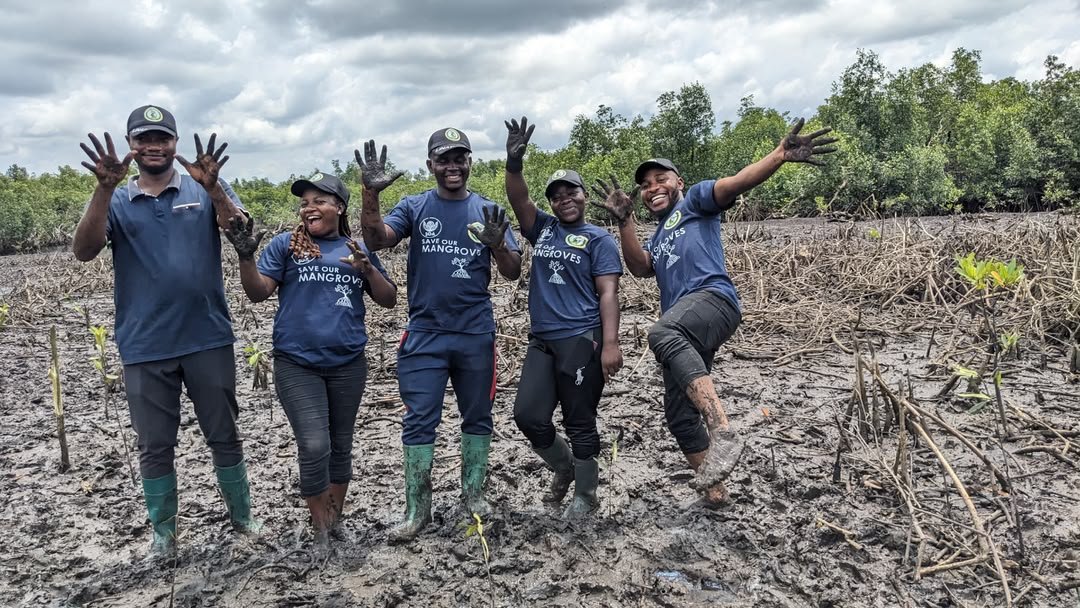
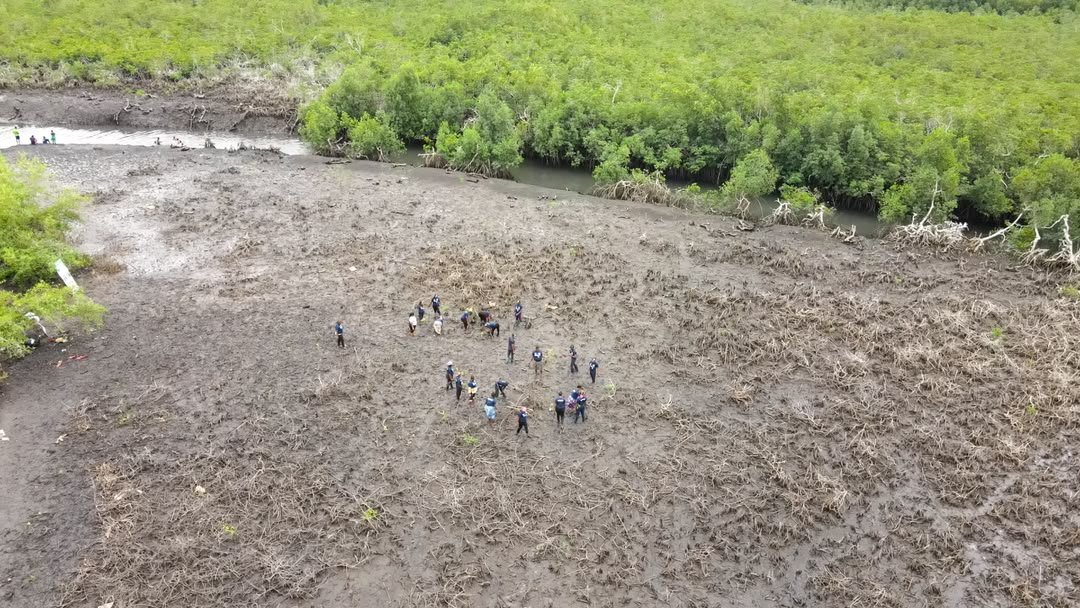
The study’s findings reinforce the importance of LINAT’s ongoing mangrove restoration efforts in the Cameroon Estuary. Restoration is essential, but it must be implemented as part of a broader conservation strategy.
Planting mangrove seedlings alone cannot resolve the problem if uncontrolled harvesting continues. Successful restoration must be accompanied by measures that reduce pressure on existing forests and enable regenerated areas to mature.
These measures include:
- 1. Participatory mangrove management with local communities.
- 2. Protection of regeneration zones and ecologically sensitive areas.
- 3. Sustainable and regulated fuelwood harvesting.
- 4. Community-based tree planting and restoration.
- 5. Monitoring of mangrove health and exploitation trends.
- 6. Awareness-raising on the ecological importance of mangroves.
- 7. Improved access to affordable alternative energy sources.
- 8. Promotion of fuel-efficient stoves and other energy-saving technologies.
- 9. Support for alternative livelihoods that reduce dependence on mangrove extraction.
Such actions can help create a balance between community energy needs and the long-term protection of coastal ecosystems.
The Role of Alternative Energy
Reducing mangrove exploitation requires more than conservation messages. Coastal communities need practical, affordable, and reliable energy alternatives.
Where households depend heavily on fuelwood because other energy sources are expensive or unavailable, restrictions alone may place additional burdens on vulnerable families. Alternative energy solutions should therefore be designed with community realities in mind.
Potential approaches include improved cookstoves, cleaner household energy technologies, sustainable charcoal alternatives, solar energy applications, and other locally appropriate solutions. The objective should be to reduce pressure on mangroves while improving household energy security.
Supporting OECM Recognition
LINAT is currently working to advance the recognition of the Cameroon Estuary as an Other Effective Conservation Measure, or OECM. The study provides valuable evidence of the area’s ecological vulnerability and the urgent need for strengthened conservation action.
OECM recognition can help highlight the importance of areas that contribute significantly to biodiversity conservation even when they are not formally designated as conventional protected areas. For the Cameroon Estuary, this process can support greater visibility, stronger collaboration, improved monitoring, and more coordinated efforts to achieve lasting conservation outcomes.
The success of such an initiative will depend on meaningful community participation. Local communities are not only users of mangrove resources; they are also essential partners in protecting, restoring, and managing them.
A Shared Responsibility
The situation described by the study is a warning, but it is also an opportunity to act. The high level of fuelwood dependence demonstrates the need for approaches that address both ecological conservation and human wellbeing.
Mangrove restoration in the Cameroon Estuary should therefore be understood as a long-term investment in biodiversity, climate resilience, fisheries, livelihoods, and community security. Protecting these ecosystems requires collaboration among local communities, conservation organizations, researchers, government institutions, development partners, and other stakeholders.
The evidence is clear: when exploitation exceeds natural regeneration, the future of the ecosystem is placed at risk. Conservation, restoration, sustainable resource management, and alternative energy solutions must advance together.
The Cameroon Estuary cannot wait for irreversible degradation. Restoring and protecting its mangroves today is essential for securing a healthier and more resilient coastline tomorrow.
About the Research
Title: Assessing Variations in the Level of Fuelwood Exploitation Across Mangrove Blocks Along the Cameroon Coastline
Author/Mentor: David Chik Forkam
Published: 4 November 2026
Journal issue: Volume 12, Issue 4
Pages: 158?174
DOI: https://doi.org/10.9734/ajraf/2026/v12i4548
Readers' Comments
No comments yet. Be the first to share your thoughts!